Train for sound practice
Accessible workshops grounded in real work situations: understand, test, question and adopt AI with judgement.
AI & automation
Practical training and automation adapted to the way your team works, so that autonomy grows without losing control.
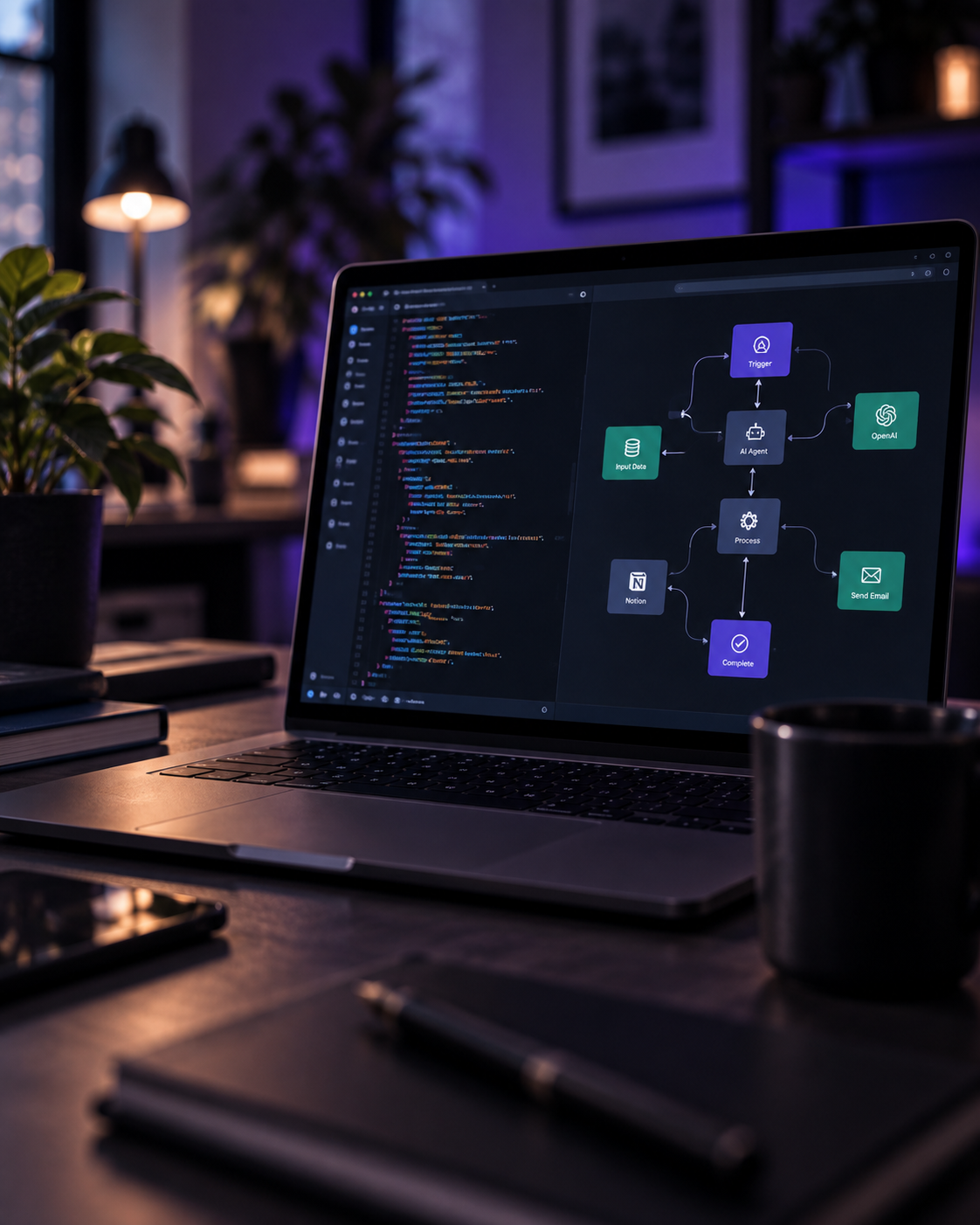
AI that belongs in the work
Start with tasks, documents and the people who will use the result.
Accessible workshops grounded in real work situations: understand, test, question and adopt AI with judgement.
Identify genuine friction, available data, risks and the uses worth prioritising before selecting a solution.
Design workflows, automations and agents that fit naturally into existing tools and habits.
AI is useful when it answers a recognisable situation: finding information, preparing a first draft, structuring content or reducing repetitive work. The task is not to add another tool, but to understand what already moves between people, documents and approvals.
See the media creation and AI practiceA practical approach
Training, a profession-specific workshop or support: the format follows the team.
Identify repetitive tasks, information loss and opportunities that deserve real effort.
Choose a small number of uses that are useful, measurable and acceptable to the people involved.
Test a workflow or assistant quickly, with safeguards and no impossible promises.
Train, document and adjust so a new use becomes help rather than another burden.
Common questions
AI creates value when the use case, data and role of people are explicit.
Teams that want to understand what AI can really do in their work, test it on concrete situations and keep a critical eye on the results.
Start with a recurring task or point of friction, then check the data, confidentiality rules, approvals and expected benefit.
Yes. Workshops, scoping sessions and follow-ups can take place in Nantes or by video, with shared material and adapted exercises.